Quick Answer: The best soil mix for Hoya plants is a chunky, “soilless” blend that mimics their natural life as epiphytes. For maximum growth and blooming, mix one part high-quality potting soil, one part orchid bark, and one part perlite. This creates the perfect balance of aeration and moisture retention, preventing the dreaded root rot while giving roots the oxygen they crave.
My Journey from Root Rot to “Hoya Heaven”
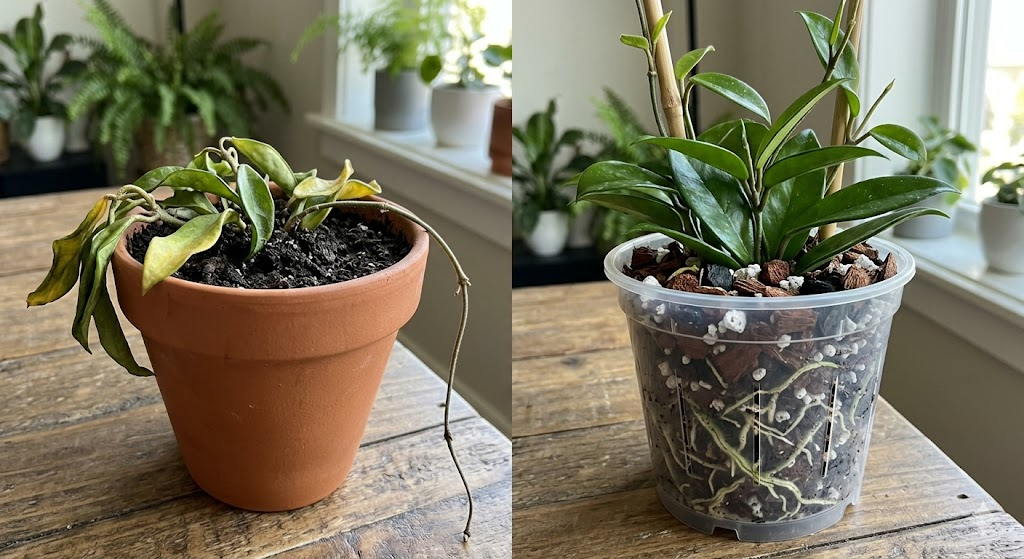
I still remember the first Hoya I ever bought—a gorgeous, waxy Hoya carnosa. I did what every beginner does: I bought a bag of “premium” indoor potting soil, tucked my plant into a cute ceramic pot, and gave it a good drink. Within three weeks, the leaves turned a sickly yellow and felt like mush. When I pulled it out of the pot, the roots were gone—literally dissolved into black slime.
That failure was my greatest teacher. I realized that Hoyas aren’t like your average pothos or philodendron. In the wild, many are epiphytic, meaning they grow on trees, clinging to bark and soaking up rain that drains away instantly. They don’t want to sit in heavy, wet dirt. They want air.
After years of trial, error, and a few more “RIP” moments, I’ve perfected a strategy for the best soil mix for hoya plants. Whether you are growing them in hanging baskets or high-humidity terrariums, the secret is all about the “chunk.”
Why Standard Soil Fails Your Hoya
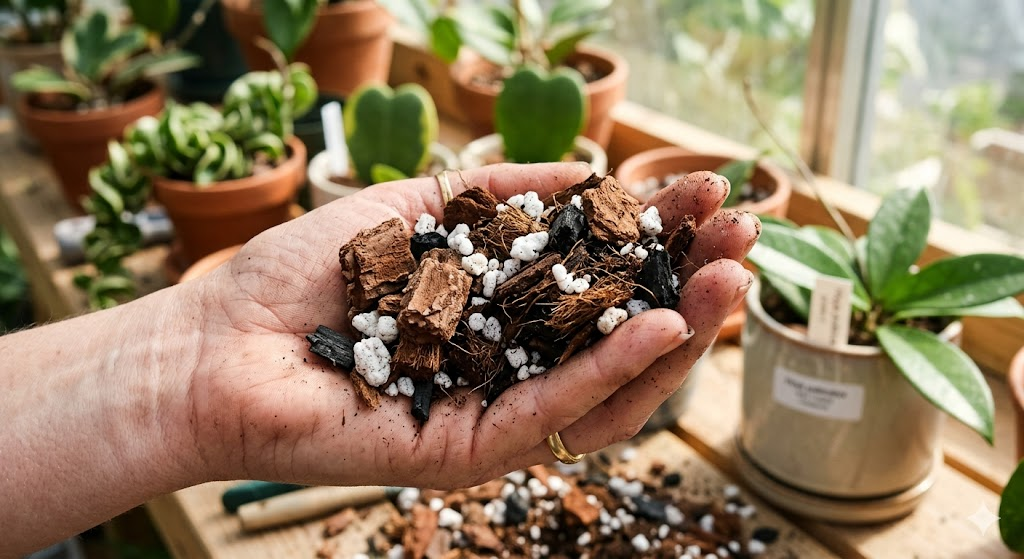
Most “all-purpose” soils are designed to hold water. For a Hoya, water-retention is a slow death sentence. Because Hoyas have specialized roots that thrive in the cracks of tree bark, they need hoya soil aeration.
If the soil is too fine, the particles collapse around the roots, cutting off oxygen. This leads to anaerobic bacteria growth (root rot). To get fast growth and blooming, you need a hoya substrate that stays damp but never “soggy.”
The “Chunky” Philosophy
When I talk about the best hoya soil mix for indoor plants, I use the “Chunky Monkey” rule. If it doesn’t look like something you’d find on a forest floor, it’s probably too dense. We are looking for a well-draining soil for hoya that allows water to pour straight through the bottom of the pot within seconds of watering.
The “Gold Standard” Hoya Soil Recipe
If you are looking for the best soil for hoya plants for beginners, don’t overcomplicate it. You don’t need a lab coat; you just need a bucket and these three ingredients.
Ingredients:
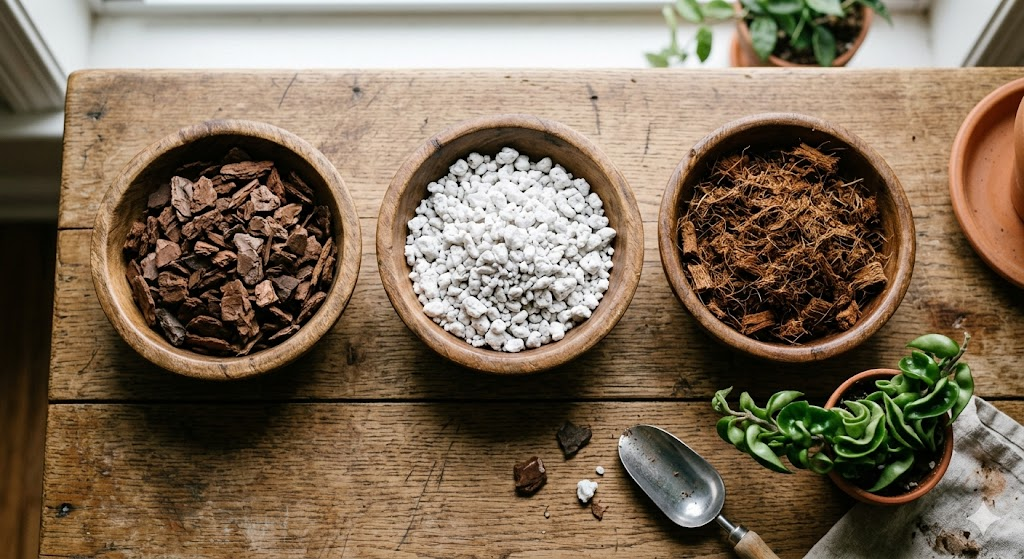
- Orchid Bark (30%): This provides the structure. It creates those large air pockets that Hoya roots love to crawl into.
- Perlite or Pumice (30%): I prefer hoya soil mix perlite (the large #3 grade if you can find it). This ensures the mix never stays compressed.
- Coco Coir or Quality Potting Soil (40%): This provides the base nutrients and holds just enough moisture so you aren’t watering every single day.
Mixing for Success
I usually toss these into a large bin and mix by hand. You’ll know you’ve got it right when you squeeze a handful of the wet mix and it falls apart immediately when you open your hand. If it stays in a ball, add more bark!
Specialized Needs: From Hanging Baskets to Terrariums
Not every Hoya lives in the same environment, so your mix should adapt.
Best Soil for Hoya Plants in Hanging Baskets
When Hoyas are up high, they dry out faster due to airflow. For my hanging baskets, I add a small handful of chopped sphagnum moss to the mix. This prevents the plant from desiccating too quickly in the summer heat, especially for thinner-leafed varieties like Hoya bella.
Best Soil for Hoya Plants in Terrariums
Terrariums are high-humidity environments where evaporation is low. In this case, I skip the potting soil entirely. I use a mix of hoya soil mix orchid bark, charcoal, and perlite. This “soilless” approach prevents the mix from becoming acidic and smelly in the closed environment.
Best Soil for Hoya Plants in Winter
During the winter, Hoyas go into a semi-dormancy. Their metabolic rate slows down, and they drink significantly less. If your soil is too heavy, the hoya soil drainage won’t be enough to combat the slow evaporation. I recommend “opening up” the soil by poking a chopstick into it a few times in November to ensure air is still reaching the roots.
Advanced Tips for Fast Growth and Blooming
If you want those iconic, chocolate-scented or cinnamon-scented flowers, the soil needs to be slightly acidic. The ideal hoya soil pH is between 6.0 and 7.0.
- The Phosphorus Trick: While the soil provides the home, the nutrients provide the fuel. I use a slow-release fertilizer in my mix, but I also ensure the orchid bark is high-quality. As bark breaks down, it slightly acidifies the soil, which many Hoyas love for blooming.
- The Pot Size Secret: Hoyas actually bloom better when they are slightly root-bound. If you put a small Hoya in a massive pot of the best soil for hoya plants in pots, the soil will stay wet too long because there aren’t enough roots to drink the water. Always “pot small.”
Troubleshooting: What Your Hoya is Telling You
As an experienced grower, I’ve learned to “read” the leaves. Here is how to fix soil-related issues:
| Symptom | Problem | The Fix |
| Wrinkled Leaves | Under-watering or Root Death | Check roots. If mushy, repot in a chunkier mix with more perlite. |
| Yellowing Base | Over-watering/Poor Drainage | Your mix is too fine. Add more orchid bark immediately. |
| No Growth for Months | Compaction/Old Soil | Soil has likely “collapsed.” Repot with fresh hoya substrate. |
| Mold on Soil Surface | Poor Airflow | Scrape off mold and add more perlite to the top layer. |
My “Lesson Learned”: The Coconut Coir Mistake
Early on, I thought I could use 100% coco coir because it was “sustainable.” Huge mistake. While it’s great for moisture, it has zero structure. My Hoya kerrii (the heart-shaped one) almost died because the coir became a dense peat-like brick. Now, I always buffer my coir with at least 50% inorganic material (perlite/pumice). Hoya soil aeration is non-negotiable!
The Beginner’s Shortcut
If you are nervous about mixing your own, look for a “Cactus and Succulent” mix and “Orchid Bark” at your local garden center. Mix them in a 50/50 ratio. This is the best soil for hoya plants for beginners because it’s hard to mess up and widely available. It provides the drainage of a desert plant with the “grip” of an orchid mix.
Final Thoughts on Hoya Care
Choosing the best soil mix for hoya plants isn’t just about keeping the plant alive; it’s about watching it thrive. When you see those first new “vines” reaching out to find something to climb, or that first “peduncle” (flower bud) forming, you’ll know your soil mix did its job.
Remember: When in doubt, make it chunkier! Your Hoya will thank you with years of beautiful, waxy foliage and heavenly-scented blooms.
Frequently Asked Questions (FAQs)
1. Can I use regular potting soil for Hoyas?
Not on its own. Regular soil is too dense and holds too much water. If you must use it, mix it with at least 50% perlite or bark to improve hoya soil drainage.
2. How often should I repot my Hoya?
Hoyas like to be snug. Only repot every 2–3 years, or when you notice the hoya potting mix has started to break down and look like fine dust.
3. What is the best pot for a Hoya?
Terra cotta is excellent for beginners because it “breathes” and helps the soil dry out. However, if you use a very chunky mix, plastic or ceramic pots work just fine.
4. Do Hoyas need a specific pH?
Most Hoyas prefer a slightly acidic to neutral hoya soil pH (around 6.0 to 7.0). Most bark-based mixes naturally fall into this range.
5. Why are the roots of my Hoya coming out of the top?
This is normal! Many Hoyas produce aerial roots to grab onto trees. It’s a sign they are happy and looking for more space or humidity.
For more information on general plant care and soil science, you can Search Google for Hoya Care Tips.