Quick Answer:
During summer, water your Hoya every 7 to 10 days, or whenever the top 2 inches of soil are bone-dry. Because Hoyas are semi-succulent, they prefer a “soak and dry” method. Increase frequency if temperatures exceed 85°F (30°C), but always prioritize high-drainage soil to prevent root rot.
The Hoya Summer Survival Guide: My Journey from Root Rot to Blooms
There is something incredibly rewarding about the waxy, porcelain-like blooms of a Hoya. But if I’m being honest, my first few years with these plants were a disaster. I treated them like my tropical ferns, keeping them constantly moist. By July, most of my collection was a mushy mess of yellowing leaves. It took a few “learning opportunities” (translation: dead plants) to realize that the hoya plant watering schedule summer requires a delicate balance of hydration and neglect.
Summer is the peak growing season, but it’s also the time when the risk of overwatering is highest because we think the heat means they need a drink every day. They don’t. Most Hoyas are epiphytic by nature—meaning they grow on trees in the wild—and their thick leaves are designed to store water.
In this guide, I’m sharing the hard-earned lessons from my own greenhouse and windowsills to help you navigate hoya plant hydration summer without the heartbreak of root rot.
Finding the Best Watering Schedule for Hoya in Summer
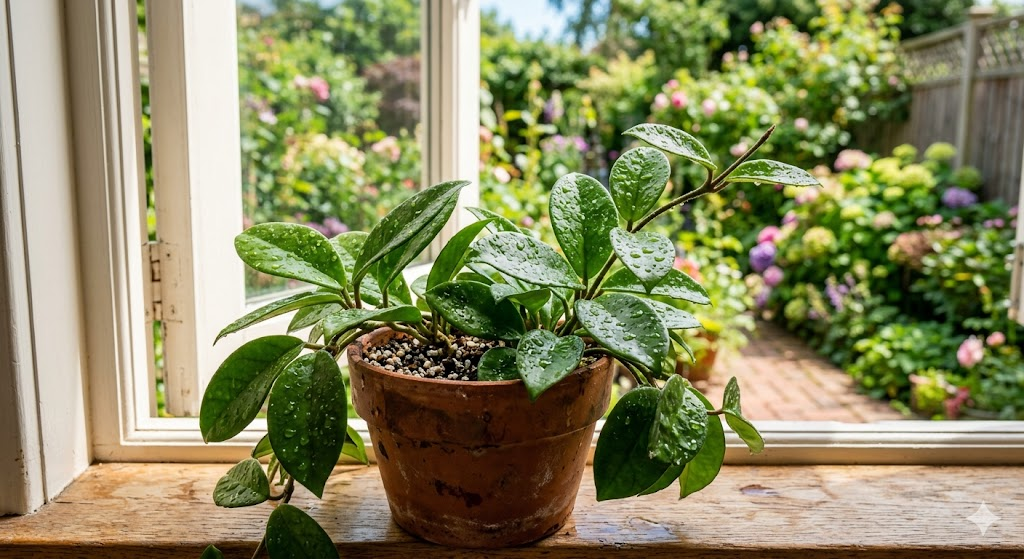
One of the biggest myths in the plant world is that you can set a calendar alert for watering. The best watering schedule for hoya in summer is dictated by your environment, not your iPhone.
Last summer, I conducted a little experiment. I kept one Hoya pubicalyx in my humid kitchen and another in my breezy, dry home office. The kitchen Hoya stayed moist for nearly 12 days, while the office Hoya needed water by day 6.
The Finger Test vs. Moisture Meters
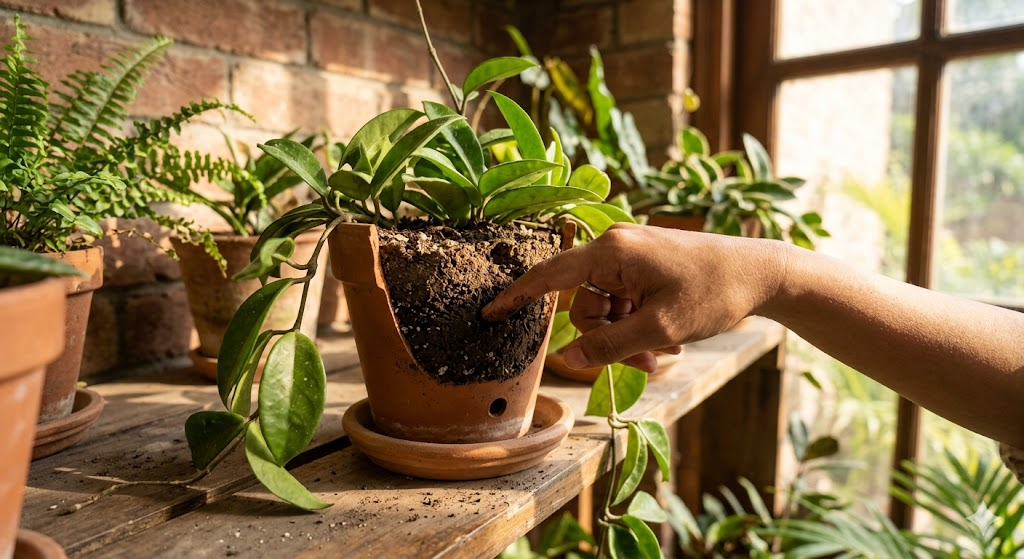
Don’t trust a cheap moisture meter; they often give false readings in the chunky, bark-heavy soil Hoyas love. Use your finger. If the top two inches feel like dry dust, it’s time. If there’s any coolness or dampness, wait two more days. This simple habit is the best way to ensure hoya plant moisture level summer stays within the “sweet spot.”
The Best Way to Water Hoya in Summer: The “Soak and Dry” Method
When I first started, I would just pour a little cup of water over the top of the soil. The water would run straight down the sides of the pot and out the bottom, leaving the root ball bone dry. The plant would shrivel, I’d add more water, and eventually, the roots would suffocate.
The best way to water hoya in summer is the “bottom watering” technique or a deep, thorough soak.
- Place your pot in a sink filled with 2 inches of water.
- Let it sit for 20 minutes until the top of the soil feels slightly damp.
- Remove it and let it drain completely.
This ensures every root gets a drink, which is vital for hoya plant watering technique success.
Timing and Water Quality: Little Details, Big Results
Does it matter when you water? Absolutely. The best time of day to water hoya in summer is early morning. By watering at 7:00 AM, you give the plant all day to absorb the moisture before the midday heat hits. Avoid watering at night; stagnant water sitting on leaves in the dark is an open invitation for fungal infections.
The Water Type Debate
I used to use tap water straight from the sink. In my city, the water is “hard” and full of minerals. Over time, I noticed white crusty buildup on my pots and my Hoyas looked “sad.” Switching to the best water type for hoya in summer—filtered or rainwater—changed everything. If you must use tap, let it sit out for 24 hours to allow chlorine to dissipate.
The Foundation: Best Soil and Pots for Summer Success
You can have a perfect schedule, but if your plant is in the wrong “home,” it won’t matter. The best soil for hoya summer watering isn’t actually soil at all—it’s a “chunky mix.”
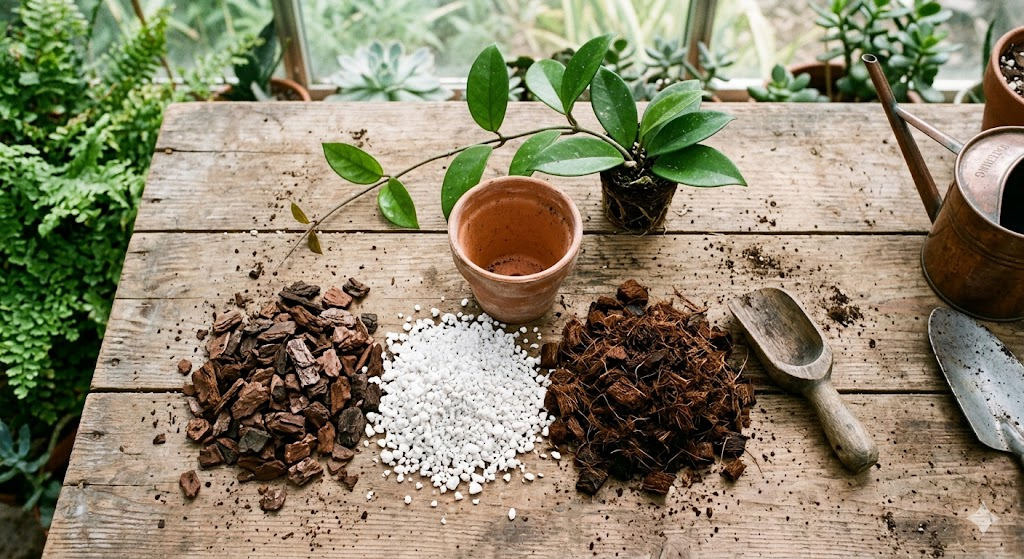
My personal “fail-proof” recipe:
- 1 part orchid bark
- 1 part perlite
- 1 part coco coir or peat moss
This mix provides the hoya plant drought tolerance they need while allowing oxygen to reach the roots. Speaking of roots, the best pot for hoya watering schedule is a terracotta pot or a plastic nursery pot with lots of drainage holes. Terracotta is porous, which helps wick away excess moisture—a lifesaver if you tend to be a “helicopter parent” who over-waters.
Tools of the Trade: The Best Watering Can for Hoya Plants
It sounds trivial, but the best watering can for hoya plants is one with a long, narrow spout. Hoyas are often trailing or bushy. A wide-mouth pitcher will splash water all over the crown of the plant, leading to rot. A narrow spout allows you to tuck the tip under the leaves and deliver water exactly where the roots are.
Feeding Your Hoya: The Summer Fertilizer Schedule
Summer is when the magic happens—growth and blooms. To support this, you need a best fertilizer schedule for hoya summer. I prefer a “weakly, weekly” approach. Use a balanced, water-soluble fertilizer diluted to half-strength every other time you water.
Pro Tip: Look for a fertilizer with a slightly higher phosphorus count (the middle number) if you want to encourage those famous “umbels” of flowers.
Troubleshooting: Humidity and Root Rot Prevention
While Hoyas are tough, the hoya plant root rot prevention summer checklist is your most important tool. If you see yellowing leaves that feel mushy, or if the plant looks wilted even though the soil is wet, you likely have rot.
Humidity Requirements
Don’t confuse watering the soil with hoya plant humidity requirements summer. In hot climates, the air gets dry. Instead of watering the soil more, try:
- Grouping plants together.
- Using a pebble tray.
- Running a humidifier nearby. Hoyas love 50-60% humidity. This helps with hoya plant hydration summer without drowning the roots.
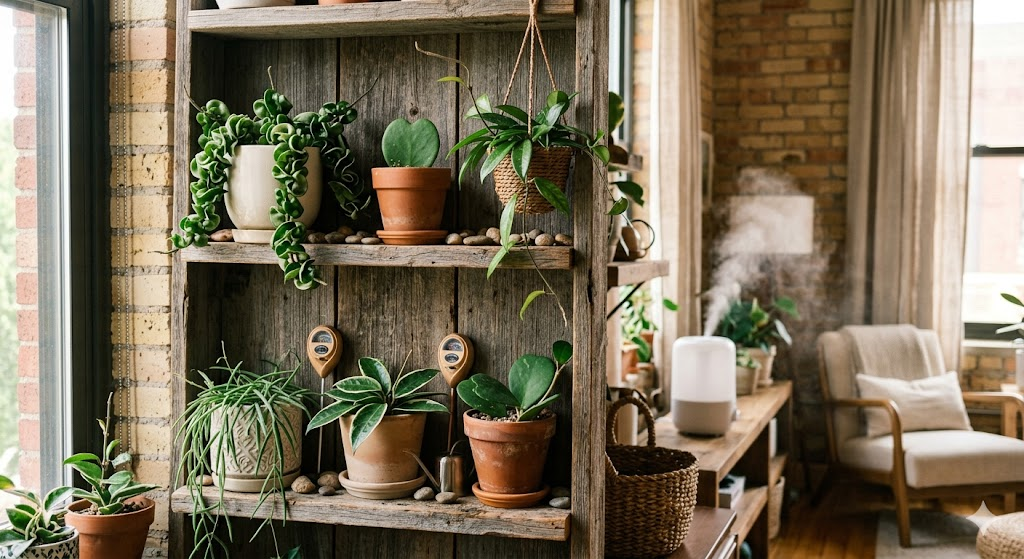
Specific Observations: The Summer Dormancy Myth
Sometimes, during extreme heatwaves (over 95°F), you might notice your Hoya stops growing. This is a mini hoya plant summer dormancy watering phase. The plant is essentially “holding its breath” to survive the heat. During these spikes, reduce watering slightly. The plant isn’t active, so it isn’t “drinking” as much. Forcing water on a dormant plant is a fast track to root rot.
Conclusion: Trust Your Instincts (and Your Plant)
Mastering the hoya plant watering schedule summer is about observation. Your Hoya will talk to you. If the leaves look puckered or wrinkled, it’s thirsty. If they look yellow and translucent, it’s drowning.
By using a chunky soil mix, a terracotta pot, and the “soak and dry” method, you are setting your plant up for a season of incredible growth. Remember, it is almost always better to underwater a Hoya than to overwater it.
Frequently Asked Questions (FAQs)
Q: How do I know if my Hoya is thirsty in the summer?
A: Look for “puckering” on the leaves. When the water reserves in the leaves run low, they lose their firmness and start to wrinkle.
Q: Can I mist my Hoya to keep it hydrated?
A: Misting provides a temporary humidity boost but doesn’t replace watering. It can also lead to fungal issues if the air circulation is poor.
Q: Why are my Hoya leaves turning yellow in July?
A: This is usually a sign of overwatering or the soil holding too much heat. Check the roots immediately for signs of rot.
Q: Does the variety of Hoya change the watering schedule?
A: Yes. Thin-leaved Hoyas (like Hoya bella) need more frequent watering than thick-leaved ones (like Hoya kerrii).
Q: What is the best way to prevent root rot in hot weather?
A: Ensure your pot has drainage and use a very chunky soil mix that allows the roots to “breathe” even when wet.
More Resources
If you want to research more about specific Hoya varieties or find local nurseries, you can Search Google for Hoya Care Tips to find the latest advice from the global community.