Quick Answer:
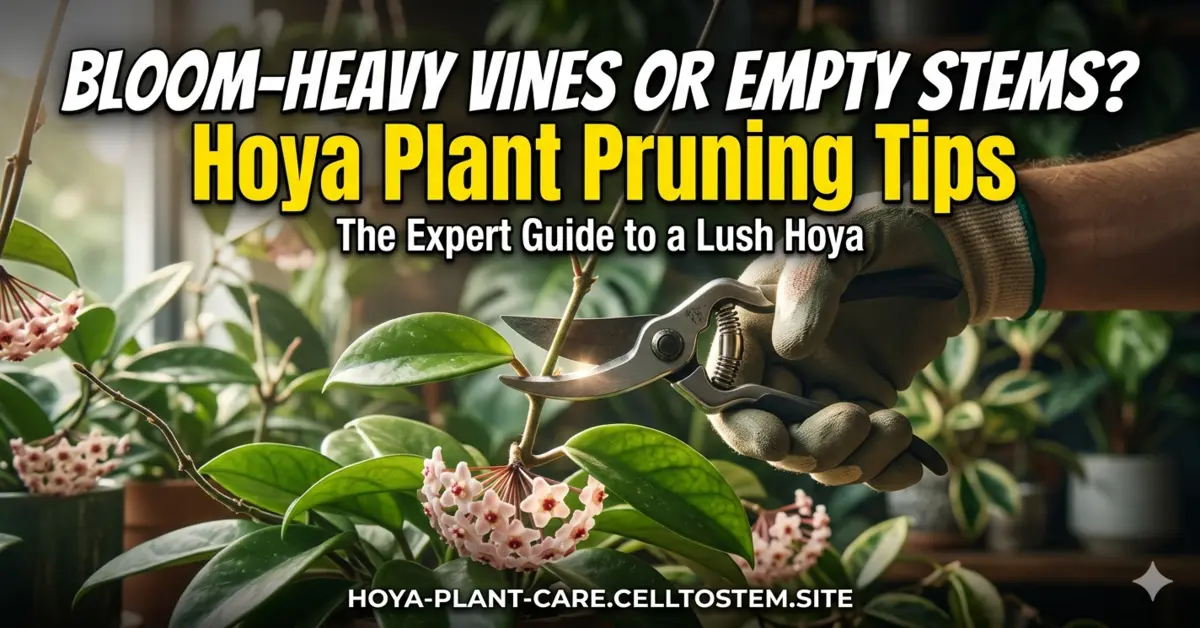
To prune a Hoya successfully, wait for the best time of year to prune hoya, which is early spring before the active growth phase begins. Use sterilized shears to cut vines just above a leaf node, but never remove the peduncles (the small, leafless spurs), as this is where flowers bloom. This encourages bushier growth and more frequent flowering.
The Art of the Hoya Haircut: Why Pruning Matters
I still remember the first time I stood over my overgrown Hoya carnosa with a pair of scissors. I was terrified. To the uninitiated, these plants look like delicate living sculptures, and the thought of cutting into those thick, waxy vines feels a bit like surgery. But after years of trial and error—and a few “vines-turned-to-stumps” disasters—I’ve learned that pruning isn’t just about aesthetics; it’s the secret to a long-lived, flowering companion.
Hoya plants are unique. They don’t grow like your average pothos. They have a specific rhythm, and if you understand that rhythm, you can transform a leggy, thin plant into a lush masterpiece. This guide covers everything from the best hoya pruning method for beginners to the advanced nuances of hoya plant rejuvenation pruning.
When to Make the Cut: Timing is Everything
If you ask ten different gardeners when to prune, you’ll get ten different answers. However, in my experience, the best time of year to prune hoya is undoubtedly early spring. Why? Because the plant is just waking up from its winter dormancy. It has a fresh surge of energy ready to go.
If you prune in the dead of winter, the plant might struggle to seal the “wound,” leaving it open to pests. If you prune in late summer, you might accidentally chop off developing flower buds. By sticking to a best hoya pruning schedule that focuses on the March-to-April window, you align your efforts with the plant’s natural hormones.
Knowing Your Variety
While the general rules apply to most, the best hoya varieties for pruning—meaning the ones that respond most vigorously—are the Hoya carnosa, Hoya pubicalyx, and the beautiful Hoya kerrii. These varieties are hardy. If you make a mistake, they usually forgive you by pushing out new growth within a few weeks.
The Professional’s Toolbelt
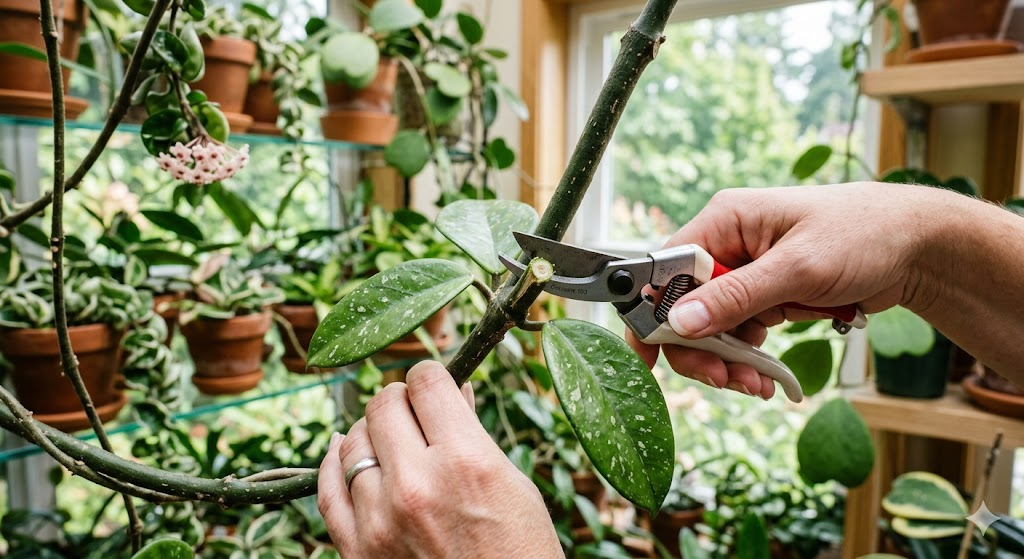
You wouldn’t use a butter knife to mince garlic, and you shouldn’t use kitchen scissors for your plants. The best pruning shears for hoya plants are small, bypass pruners or high-quality floral snips. Bypass shears work like scissors, where two blades slide past each other, creating a clean, crisp cut that heals quickly.
Pro Tip: Always wipe your blades with rubbing alcohol between plants. I once moved from a Hoya with a hidden fungal issue to a healthy one without cleaning my tools, and I lost three years of growth on my favorite “Compacta” within a month. Lesson learned: sanitation is non-negotiable.
Step-by-Step: Best Hoya Pruning Method for Beginners
If you’re new to this, start slow. The best hoya pruning tips for indoor plants all start with one rule: Never remove more than 30% of the plant at once.
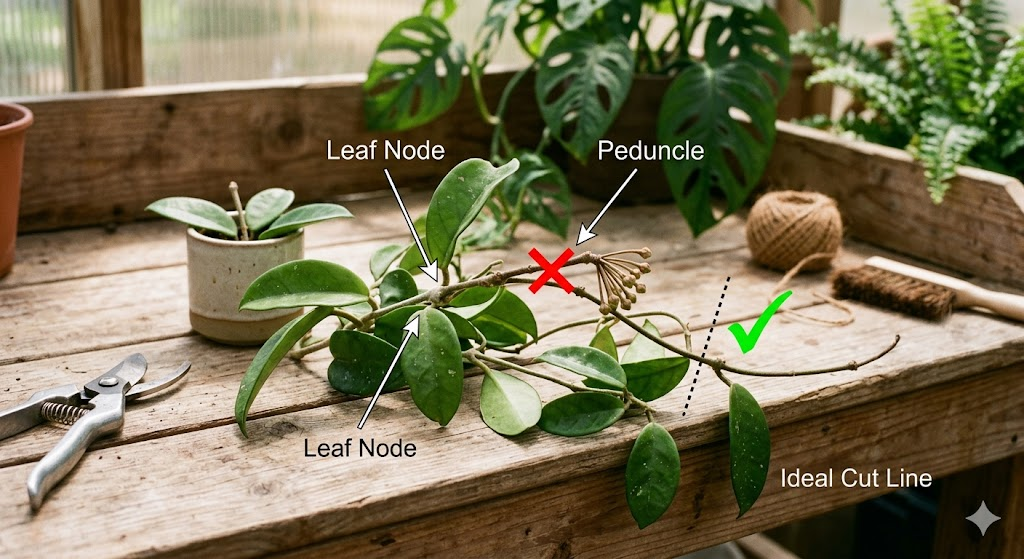
- Identify the Nodes: A node is the “bump” on the vine where leaves and roots grow. This is where the magic happens.
- The Angle: Place your shears about 1/4 inch above a node. Cut at a slight angle. This prevents water from sitting on the flat surface of the cut, which can lead to rot.
- The “Peduncle” Rule: This is the most important piece of hoya plant care. Look for small, woody spurs that look like tiny microphones. These are peduncles. Hoyas bloom from the same peduncle every year. If you cut it off, you won’t see flowers on that vine for a very long time.
Pruning for Flowers vs. Pruning for Shape
There is a big difference between hoya vine trimming for size and the best way to prune hoya for flowers.
To get those iconic, porcelain-like blooms, you actually want to leave the long, leafless “scouts” alone. Many beginners see a long, bare vine and think the plant is unhappy, so they chop it off. In reality, that vine is looking for something to climb. Once it finds a trellis or a hook, it will fill in with leaves and flowers.
However, if your goal is hoya plant shaping, you can pinch back the tips of these vines to encourage the plant to branch out lower down. This creates a “bushy” look rather than a “stringy” one.
My “Oops” Moment: A Lesson in Rejuvenation
Last year, I ignored a Hoya australis that had become a tangled mess in a dark corner. It was half-dead, leggy, and sad. I had to perform hoya plant rejuvenation pruning. I ended up cutting the plant back almost to the soil line, leaving only two nodes per vine.
I thought I’d killed it. But by focusing on hoya plant growth tips—increasing light and using a weak, phosphorus-heavy fertilizer—the plant exploded with new, vibrant growth. Sometimes, the best pruning technique for hoya vines is a “hard prune” to reset the plant’s clock.
Don’t Waste the Scraps: Hoya Propagation
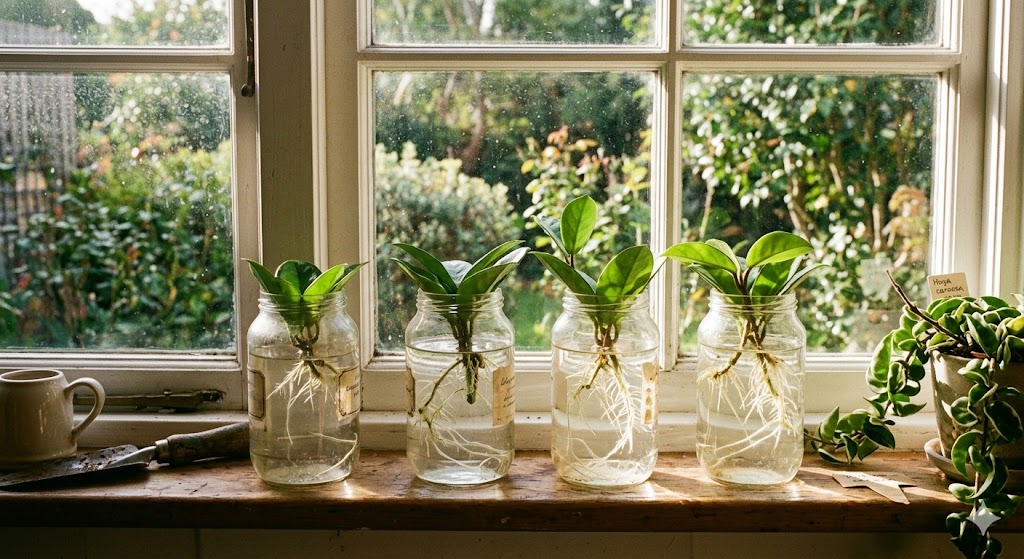
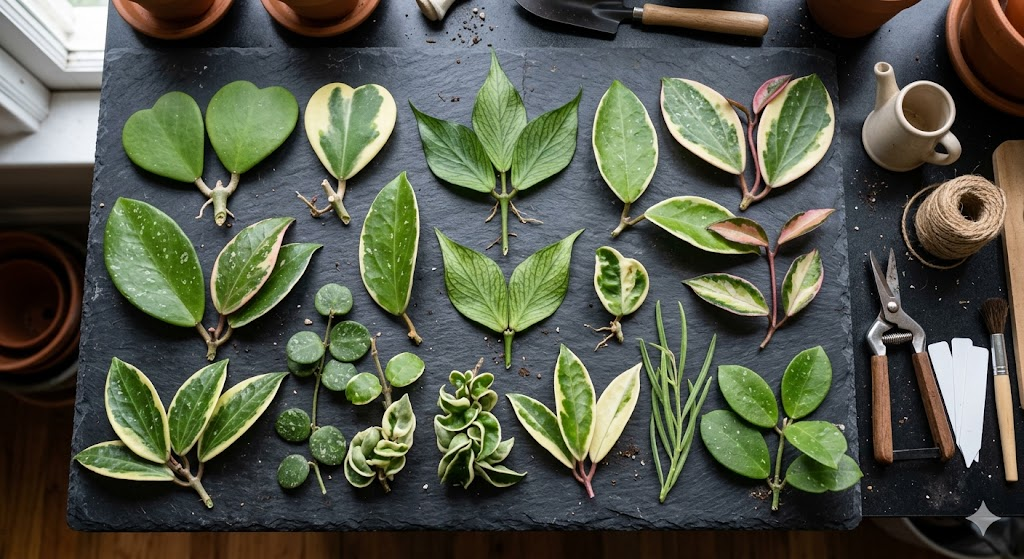
One of the best things about hoya plant maintenance is that every cut is a potential new plant. Hoya propagation from cuttings is incredibly rewarding. I prefer the “water method”:
- Take a 4-inch cutting with at least two nodes.
- Remove the bottom leaves.
- Place it in a jar of filtered water in a bright spot.
- Wait for roots that are at least two inches long before potting in a chunky soil mix.
Troubleshooting Common Pruning Issues
Even with the best hoya pruning tips, things can go sideways. Here’s what to look for:
- Sap Leaking: Hoyas bleed a milky white latex sap. It’s normal, but it can be sticky and irritating to skin. I usually dab the cut with a bit of cinnamon—it acts as a natural antifungal and helps the sap “clot.”
- No New Growth: If your plant doesn’t sprout after pruning, it likely needs more light. Move it closer to an East-facing window.
- Yellowing Leaves: This usually isn’t a pruning issue; it’s an overwatering issue. Ensure your pot has excellent drainage.
Advanced Shaping: Using Trellises
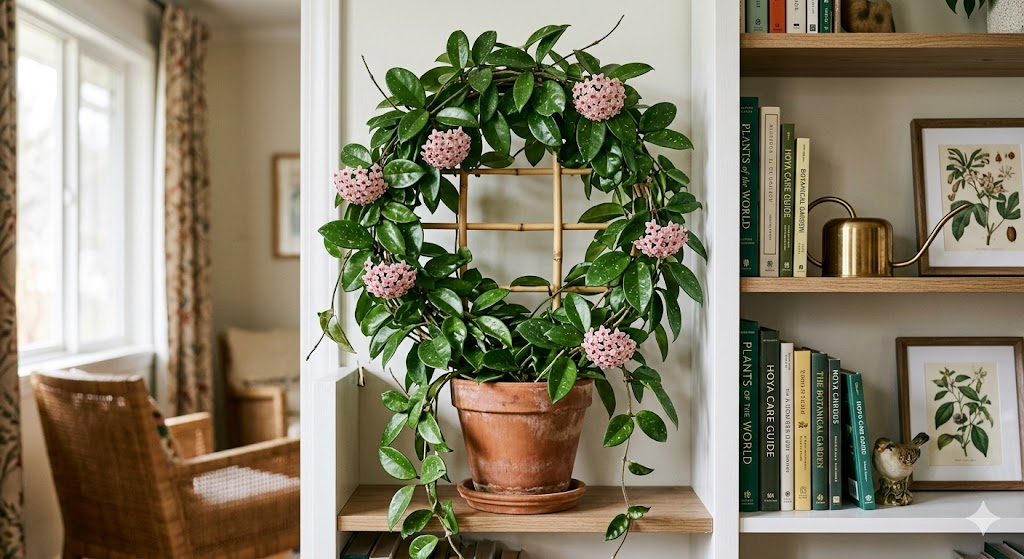
As your plant grows, hoya plant shaping becomes a vertical game. Since hoyas are epiphytes (they often grow on trees in the wild), they love to climb. Instead of just trimming, try wrapping the vines around a circular hoop or a moss pole. This mimics their natural environment and often triggers faster leaf production.
Conclusion: Trust Your Instincts
At the end of the day, your Hoya will tell you what it needs. If it’s reaching for the sun and looking thin, give it a trim. If it’s blooming happily, put the shears away. By following a consistent hoya plant pruning schedule and respecting the “peduncle rule,” you’ll have a plant that brings joy for decades.
Remember, gardening is a conversation between you and the plant. Sometimes you speak (by pruning), and sometimes you listen (by watching how it grows).
Frequently Asked Questions
1. Can I prune my Hoya while it is blooming?
It is best to avoid pruning while the plant is actively flowering. The plant is putting all its energy into the blooms, and cutting it now can cause the flowers to drop prematurely.
2. What happens if I accidentally cut off a peduncle?
Don’t panic! The plant will eventually grow new ones, but it may take a season or two. Just be more careful next time!
3. Does pruning help with pests like mealybugs?
Yes. Hoya plant maintenance includes removing heavily infested or damaged leaves, which can help control the spread of pests. However, you should still treat the plant with neem oil or insecticidal soap.
4. How do I make my Hoya grow faster after pruning?
Provide bright, indirect light and maintain high humidity. Hoyas love a “chunky” soil mix (orchid bark, perlite, and potting soil) that allows the roots to breathe.
5. Is the milky sap toxic?
The sap can be an irritant to humans and is generally considered toxic to pets if ingested in large quantities. Always wash your hands after pruning and keep the plant away from curious cats and dogs.
For more information on different species and care guides, you can always search for specific varieties on the Google Search Bar.
Thank You For Visiting Our Website https://hoya-plant-care.celltostem.site/