Quick Answer:
To get a Hoya to bloom, prioritize bright, indirect light (at least 6 hours daily) and allow the plant to become slightly root-bound in a snug pot. Avoid pruning the leafless spurs (peduncles) after flowers fade, as this is where new buds form. Use a high-phosphorus “bloom booster” fertilizer during the growing season and maintain a consistent drying-out period between waterings to trigger the plant’s reproductive cycle.
The Secret Language of the Wax Flower
There is a specific kind of magic that happens when you walk into a room and smell something like chocolate-dipped vanilla or spicy cinnamon, only to realize it’s coming from a plant. For years, I kept Hoyas as “foliage plants.” I loved their thick, succulent-like leaves, but the elusive hoya plant star-shaped flowers always seemed like something that only happened for other people.
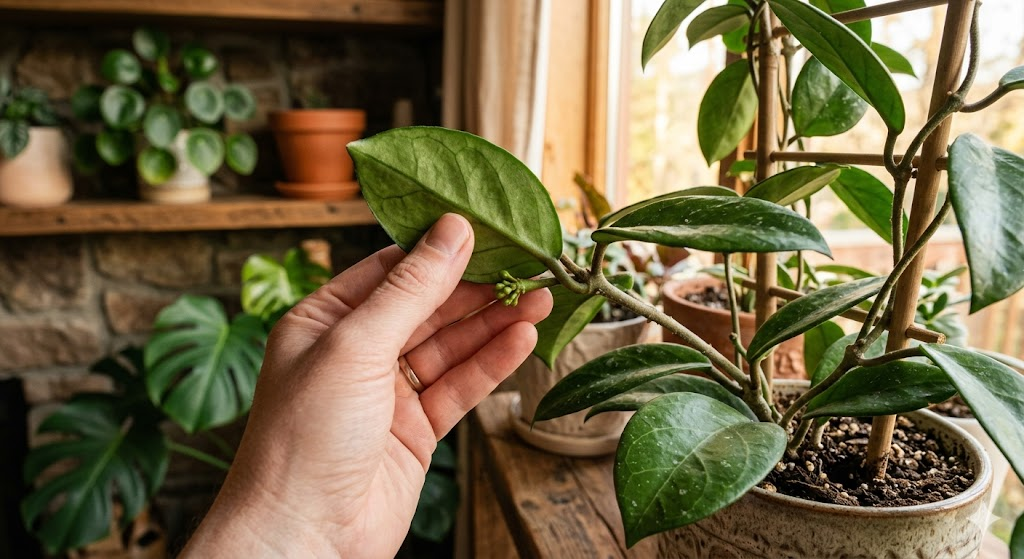
I remember my first “bloom fail.” I had a gorgeous Hoya carnosa that finally produced a tiny, green nub. I was so excited that I moved it to a “better” spot on the mantle to show it off. Two days later, the nub—which I later learned is called an umbel—shriveled and fell off. I was devastated. That failure taught me the first rule of Hoya blooming: once they decide to flower, they hate change.
If you are struggling to get your “porcelain flower” to show off, you aren’t alone. These plants are slow, steady, and a bit stubborn. But once you understand their rhythm, you can turn your home into a fragrant sanctuary.
1. Light: The Engine of the Bloom
When people ask me for hoya plant blooming tips, the first thing I look at is their windows. You cannot “wish” a Hoya into blooming in a dark corner. While they can survive in low light, they will never have the energy to produce flowers.
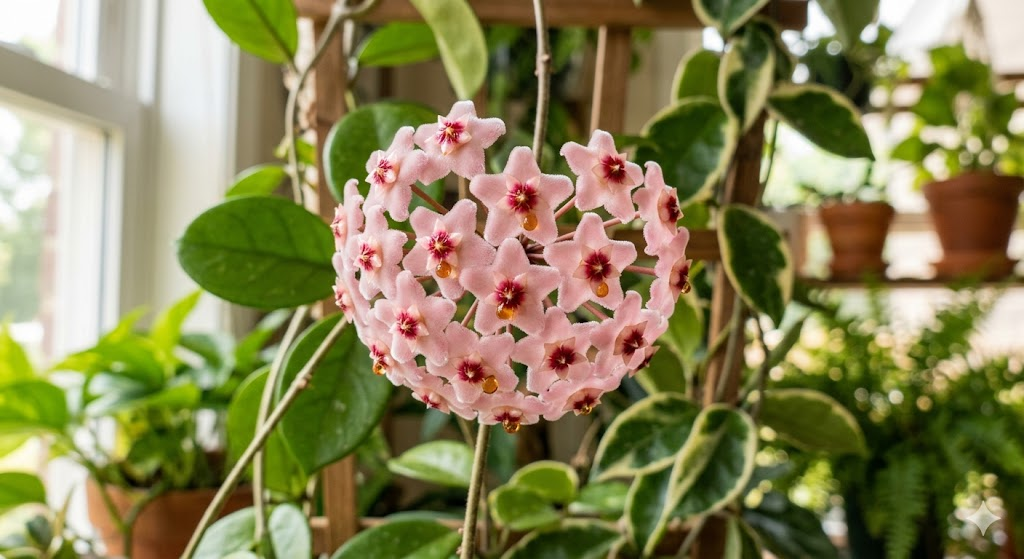
The best light for hoya plant flowering is bright, indirect sunlight. In my experience, an East-facing window is the “Goldilocks” zone. It provides that soft morning sun that wakes the plant up without scorching the leaves. If you only have South-facing windows, pull the plant back a few feet or use a sheer curtain.
I’ve found that “sun-stressing”—where the leaves turn a beautiful reddish hue—is often a sign that the plant is getting just enough light to trigger its reproductive cycle. If your Hoya is deep green and reaching with long, leafless vines, it’s searching for more light. Give it what it wants!
2. Choosing the Right Varieties
Not all Hoyas are created equal when it comes to flowering. If you are a beginner, don’t start with a finicky high-altitude species. The best hoya plant for beginners to bloom is undoubtedly the Hoya lacunosa or the Hoya bella.
- Hoya Bella: This one is a blooming machine. Unlike others, it doesn’t always regrow flowers from the same spot, but it produces clusters easily.
- Hoya Linearis: Great if you like a “curtain” look with lemon-scented flowers.
- Hoya Carnosa: The classic “wax plant” that is hardy and reliable.
When looking for the best hoya plant varieties for flowers, I always tell people to check the fragrance profile. Some smell like butterscotch, while others have a heavy, musky scent that can be overwhelming in a small bedroom.
3. The “Snug Pot” Theory
One of the biggest mistakes I made early on was giving my Hoyas “room to grow.” I put a small cutting into a massive ceramic pot, thinking I was being helpful. The plant spent three years growing roots to fill that space and zero energy on flowers.
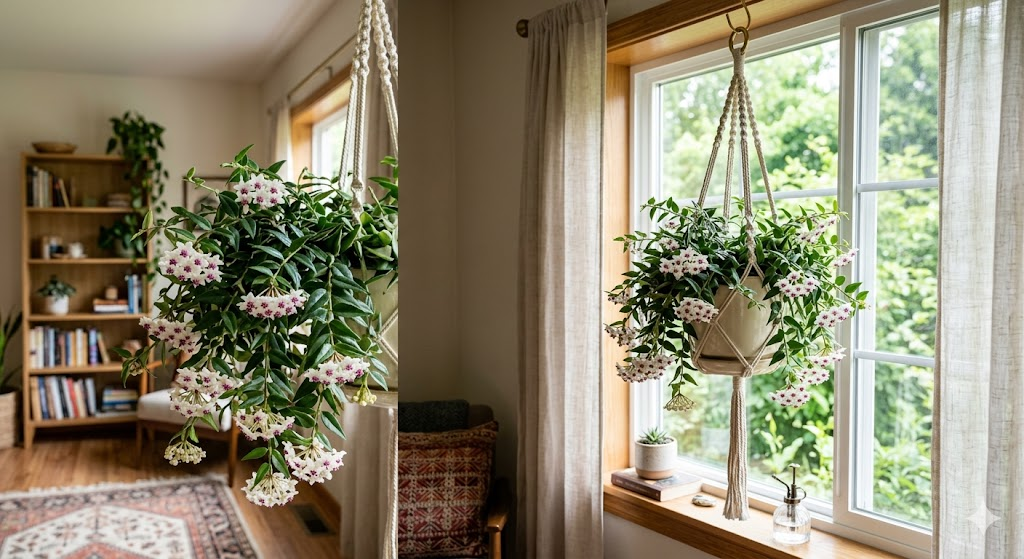
The best pot for hoya plant blooms is actually a small one. Hoyas love being root-bound. There is something about the roots hitting the edges of the pot that signals to the plant, “Okay, I’ve conquered this space, now it’s time to reproduce.”
I prefer terracotta or plastic nursery pots tucked into decorative planters. This allows the roots to breathe and ensures the soil doesn’t stay soggy, which is the fastest way to kill a Hoya.
4. Soil and Drainage: The Foundation
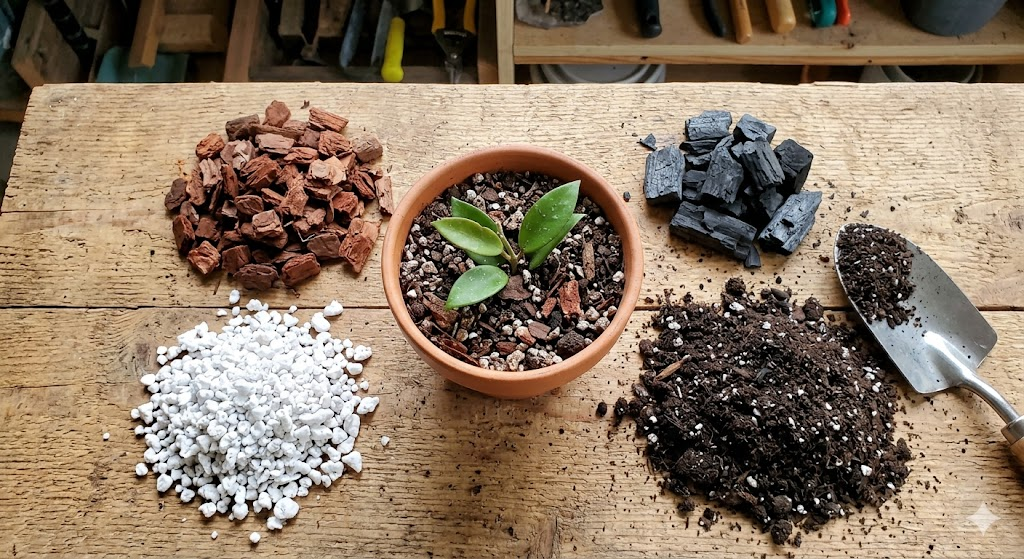
You can’t use standard potting soil here. It’s too heavy. The best soil for hoya plant blooms is a chunky, airy mix. I use a “modified orchid mix”:
- 1 part potting soil
- 1 part orchid bark
- 1 part perlite or pumice
- A handful of horticultural charcoal
This mimic’s their natural environment. In the wild, many Hoyas are epiphytic, meaning they grow on trees and soak up nutrients from decaying organic matter and rain. If the soil is too dense, the roots can’t “breathe,” and hoya plant bud development will stall before it even starts.
5. Feeding for Flowers
While light is the engine, fertilizer is the fuel. Many growers use a balanced 10-10-10 fertilizer, but when I want to see those hoya plant porcelain flowers, I switch to a “Bloom Booster.”
The best fertilizer for hoya plant flowers is one with a higher middle number (Phosphorus). Look for something like a 5-10-5 NPK ratio. I start feeding my plants every other watering in early spring.
Pro Tip: Don’t overdo it. “Salt buildup” in the soil can burn the sensitive root tips. I always flush my pots with plain distilled water once a month to keep the soil fresh.
6. The Watering Schedule: Consistency is Key
The best watering schedule for hoya blooms isn’t a set number of days; it’s a feeling. I wait until the top two inches of soil are bone dry. For many varieties, the leaves will get slightly soft or “bendy” when they are thirsty.
However, during hoya flower care—specifically when you see tiny buds forming—do not let the plant stay dry for too long. If the plant gets stressed by drought while it has buds, it will “blast” (drop) them to save its own life. It’s a delicate balance: dry enough to trigger the bloom, but moist enough to sustain it.
7. Troubleshooting: Why Won’t My Hoya Bloom?
I’ve spent many nights staring at my plants, wondering what I was doing wrong. Here is the professional troubleshooting advice I wish I had five years ago:
- The “Never Prune” Rule: Hoyas bloom from a permanent spur called a peduncle. Every year, the new flowers grow from that same exact nub. If you “tidy up” your plant and snip off those weird leafless sticks, you are literally cutting off your future flowers.
- Temperature Drops: Some species, like Hoya australis, need a slight drop in nighttime temperatures to trigger blooming. Try moving them to a slightly cooler room (around 60°F or 15°C) in late winter.
- Humidity: While they have waxy leaves, Hoyas are tropical. If your home is very dry (under 30% humidity), the hoya plant nectar might dry up, and the flowers will fade quickly. A small humidifier nearby makes a world of difference.
8. Managing the Fragrance and Nectar
When your Hoya finally blooms, you’ll notice two things: the hoya plant fragrance and the nectar.
The scent is usually strongest at night. This is because, in the wild, they are pollinated by moths. It can be magical, but if you have a huge Hoya carnosa in full bloom, the scent can be thick.
Also, watch out for the nectar! These flowers produce tiny droplets of sugar water. It’s beautiful but can be messy. If your plant is hanging over a hardwood floor or a nice rug, you might want to place a mat underneath. The nectar is a sign of a very healthy, happy plant.
Final Thoughts: The Reward of Patience
Growing Hoyas isn’t for people who want instant gratification. It’s a slow-motion hobby. But there is nothing quite like the feeling of seeing those tiny hoya plant wax flower stars open for the first time. It’s a badge of honor for any indoor gardener.
By focusing on the best hoya plant for blooming indoors and giving it the “snug pot” and “bright light” treatment, you aren’t just growing a plant—you’re curating an experience. Stick with it, don’t cut the spurs, and let the plant tell you when it’s ready.
FAQs
How long does it take for a Hoya to bloom?
Usually, a Hoya needs to be 2 to 3 years old before it is mature enough to flower. Some cuttings from mature plants may bloom sooner if they are kept in a root-bound state.
Should I mist my Hoya flowers?
Should I mist my Hoya flowers? No. Misting the actual flowers can lead to fungal issues or cause the petals to brown. Focus on keeping the humidity in the air high rather than putting water directly on the blooms.
Why are my Hoya buds falling off before they open?
This is called “bud blast.” It’s usually caused by a sudden change in temperature, moving the plant, or letting the soil get too dry during the budding stage.
Can I grow Hoyas under artificial lights?
Absolutely. Many people have great success using full-spectrum LED grow lights for 12 hours a day to supplement natural light.
What is the most fragrant Hoya?
Hoya lacunosa is famous for its intense, cinnamon-clove scent, while Hoya carnosa has a more traditional “chocolate-vanilla” aroma.
Find more tips on Google: Search for more Hoya care guides on Google
Thank You For Visiting Our Website https://hoya-plant-care.celltostem.site/