
Quick Answer:
To care for a Hoya plant indoors, place it in bright, indirect light and use a very chunk, well-draining soil mix (like one made for orchids). Water only when the soil is completely dry and the leaves feel slightly soft. Keep temperatures warm, above 60°F (15°C), and avoid drafty areas.
Introduction: The Timeless Appeal of the Wax Plant
Hoya plants, often called “Wax Plants” or “Porcelain Flowers,” have been beloved indoor companions for decades. Known for their thick, succulent-like leaves and stunning, fragrant clusters of star-shaped flowers, they offer a touch of the exotic that is surprisingly easy to maintain. Many people assume these plants are difficult because they look so unique, but they are actually very forgiving.
The key to successful hoya plant care indoors is understanding their natural environment. Most Hoyas are epiphytes, meaning in the wild, they grow on other trees and draw moisture from the air and rain, rather than sitting in dense soil. This guide will walk you through the essential elements to help your Hoya thrive.
1. Lighting: The Sweet Spot for Hoya Success
Lighting is the single most important factor for Hoya care. If you get the light right, many other care elements become easier.
Understanding Hoya Plant Light Needs Inside
Hoyas love bright, indirect light. A spot near an east-facing window, which gets gentle morning sun, is usually perfect. West-facing windows can work too, but you might need a sheer curtain to block the intense afternoon sun, which can burn the leaves. South-facing windows are also good, provided the plant is a few feet back from the glass.
Can they grow in low light? While some specific types might survive, they will grow extremely slowly and will almost certainly never bloom. The best hoya plant for low light indoors is often cited as Hoya linearis or standard Hoya carnosa, but even these prefer brighter spots.

2. Watering and Soil: The Epiphytic Connection
This is the second most common place people struggle with Hoyas. We must respect their epiphytic nature. Because their roots are used to gripping trees and being exposed to air, they cannot tolerate sitting in wet, dense soil.
Best Soil for Hoya Plants in Pots
Forget standard “potting mix.” Hoyas need a specialized, super “chunky” mix. The best soil for hoya plants in pots is one that is incredibly well-draining. A mix that is 1/3 orchid bark (large chunks), 1/3 perlite or pumice, and 1/3 high-quality potting soil provides the perfect balance of aeration and structure. This simulates the bark they would grow on in the wild.
The Goldilocks Watering Method
When it comes to wax plant care indoors, “less is more.” Treat them almost like succulents. Allow the entire pot of soil to dry out completely between waterings. When you do water, soak it thoroughly until water flows freely from the drainage holes. The best watering can for hoya plants is a small one with a narrow spout, allowing you to direct the water precisely to the soil without splashing the leaves, which can sometimes lead to fungal issues.
Pro Tip: Use the “taco test” (for Hoya carnosa varieties). Gently try to fold a mature leaf. If it is firm and rigid, the plant does not need water. If it is soft and slightly pliable (like a soft taco shell), it’s time to water.
3. Pots, Pests, and Temperature: The Right Environment
Your choice of container and the overall environment are just as crucial as water and light.
Best Pots for Hoya Plant Care
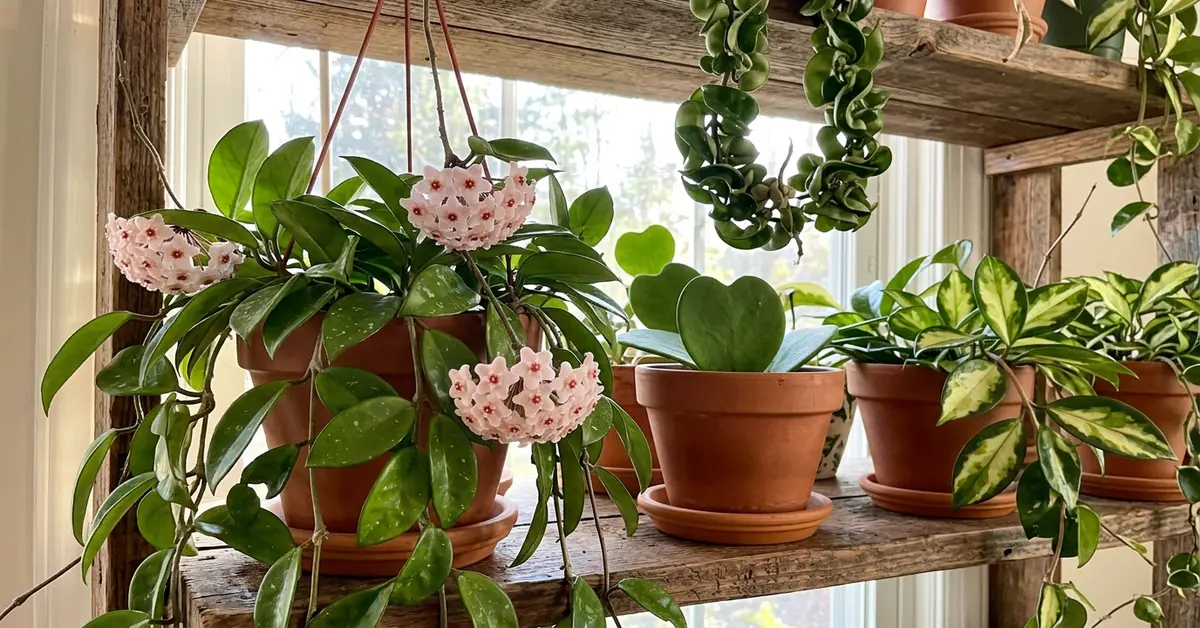
Always use a pot with excellent drainage holes. Beyond that, many Hoya growers prefer terracotta (clay) pots. Terracotta is porous, meaning it allows moisture to evaporate through the sides, which helps prevent the soil from staying wet for too long. If you use ceramic or plastic, you must be even more careful not to overwater. Hoyas also have relatively small root systems and actually prefer to be slightly root-bound. Choose a pot that just fits the root ball; too much extra soil means too much moisture storage.
Temperature Tolerance and Humidity
Think tropical. The hoya plant temperature tolerance generally falls between 60°F (15°C) and 85°F (29°C). Keep them away from drafty windows in winter and direct blasts from air conditioning vents in summer.
Hoya plant humidity requirements can vary. Standard Hoya carnosa is very adaptable to typical home humidity (around 40%). However, many exotic Hoyas thrive with higher humidity (60% or more). You can boost humidity using a humidifier or a pebble tray.
Hoya Plant Pest Control Indoors
The main pests to watch out for are mealybugs (they look like small bits of cotton fluff) and spider mites (identified by tiny webs). The best pest control is prevention: check your plant regularly. If you find a few mealybugs, dab them directly with a cotton swab dipped in rubbing alcohol. For larger infestations, use insecticidal soap or Neem oil, following the instructions carefully.

4. Advanced Care: Fertilizer, Repotting, and Pruning
Once you have the basics down, you can focus on maximizing your Hoya’s growth and beauty.
Best Fertilizer for Indoor Hoya Plants
Hoyas are not heavy feeders. The best fertilizer for indoor hoya plants is a balanced liquid houseplant fertilizer (like a 20-20-20 blend), diluted to half-strength. Feed them once a month during the active growing season (spring and summer). When growth slows in the fall and winter, stop fertilizing.
Tip for Flowers: A “bloom booster” fertilizer (higher in phosphorus) can be used occasionally in spring to encourage those famous flowers.
Best Time to Repot Hoya Plant
Hoyas do not need frequent repotting. The best time to repot hoya plant is in the spring, and only when the plant is completely root-bound (roots are circling the pot or growing heavily out of the drainage holes). Often, you will only need to repot every 2 to 4 years. Never repot a Hoya when it is in bloom or forming buds, as it may drop them in stress.
Indoor Hoya Plant Pruning and Trailing Growth Care
Pruning is rarely necessary for the plant’s health but can be done for shaping. The crucial rule is: never cut the flower spurs (peduncles). These are the small, leafless woody nubs where the flowers emerge. Hoyas bloom from the same peduncle year after year. If you cut it, that vine will never bloom again.
Hoyas are fantastic vines. Hoya plant trailing growth care involves deciding if you want them to trail (hang down) or climb. In the wild, they are climbers. If you give them a small moss pole or trellis to grip, their leaves will often grow larger and the plant may bloom sooner.
5. Blooming Secrets: How to Get Your Hoya to Flower
Everyone wants those amazing porcelain flowers! While Hoya care is easy, getting them to bloom requires patience and specific conditions. Here are our top hoya plant flowering tips:
- Light is King: If your Hoya is not blooming, it is almost certainly not getting enough light.
- Age Matters: Some Hoya varieties must be quite mature (several years old) before they will bloom for the first time.
- Root-Bound: They flower more reliably when they feel slightly crowded in their pot.
- Temperature Stress (The Good Kind): A slight drop in nighttime temperatures (by 10 degrees) can sometimes trigger blooming.

6. Selecting Your Hoya: A Match for Every Space
There is a Hoya out there for every plant collector.
Best Hoya Plant for Beginners Indoors
The classic Hoya carnosa indoor care is the best starting point. They are the hardiest, least demanding, and most likely to tolerate slight care mistakes. Varieties like Hoya carnosa ‘Krimson Queen’ (variegated edges) or ‘Krimson Princess’ (variegated centers) are stunning and widely available. The Hoya pubicalyx is another fast-growing, resilient option.
Best Hoya Plant for Small Spaces
If you have limited room, consider the Hoya compacta (Hindu Rope Plant). It has curly, contorted leaves that grow very tightly along the stem, keeping the overall plant compact while still being a visual knockout. The Hoya linearis, with its thin, curtain-like leaves, is also a good choice for narrow trailing display.
Conclusion: Growing Your Hoya Journey
Hoya plants are more than just foliage; they are long-term companions that reward patience with stunning blooms and elegant growth. By respecting their need for bright, indirect light and a very chunky, well-draining soil mix, you will solve 90% of the common Hoya issues. Remember, when in doubt, do less. Water less, fertilize less, and repot less. Enjoy the slow, steady journey of these incredible wax plants in your indoor jungle.